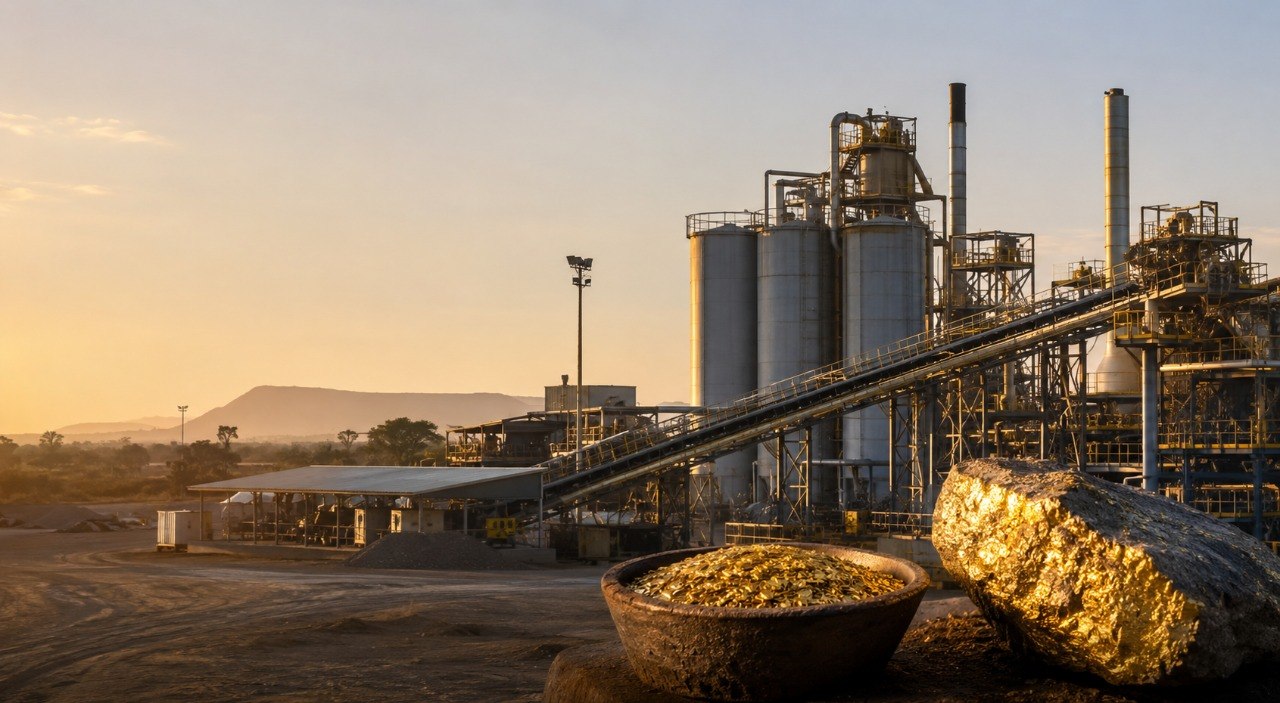
Zimbabwe has licensed a second gold refinery to handle rising output, a move that points to a simple problem: the country’s gold sector is growing faster than its current processing setup.
News24, citing Bloomberg, reported that the new refinery will be built in Bulawayo and is due to be commissioned next year. The report said Zimbabwe is still selling all of its gold through Fidelity Gold Refinery, but that arrangement may not be enough if production keeps rising.
The timing matters. Zimbabwe is targeting 50 tonnes of gold output in 2026, up from a record 46.7 tonnes last year, according to the News24/Bloomberg report. Search results also point to recent industry updates showing gold deliveries of around 17 tonnes in the first five months of 2026, which suggests the sector is still moving at a solid pace.
That makes the second refinery more than a symbolic announcement. If production keeps climbing, refining capacity becomes part of the bottleneck. A single state-linked processor can only handle so much volume before turnaround times, logistics and concentration risk start to matter.
The new facility also fits a broader policy pattern. Zimbabwe has been leaning on gold as one of its most important export earners, and gold remains central to the country’s wider economic story, including reserve accumulation and the credibility of the ZiG framework. But that context should not be overstated. A second refinery does not automatically lift the currency. It simply gives the sector more room to process output if the mining side delivers.
For now, the key question is execution. The investors have not been named yet, and the refinery is only reported to be on the way. If it is commissioned on schedule, Zimbabwe will have taken one more step toward a less concentrated gold-processing system. If it stalls, the bottleneck stays where it is.
Readers who want to follow the wider gold and currency story can use the ZimRate homepage, check the exchange rate history, or try the currency converter.
This article is for informational purposes only and does not constitute financial advice.