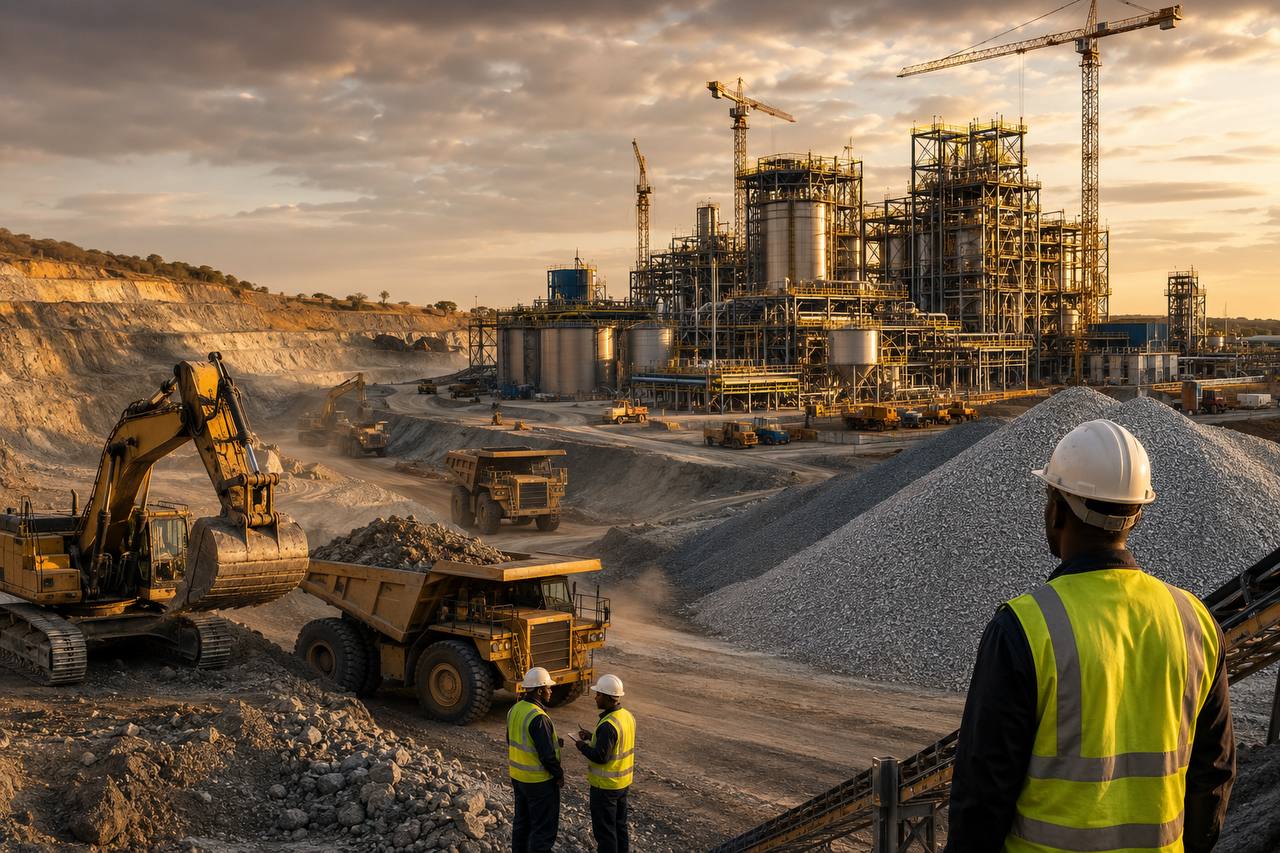

Dinson Iron and Steel Company's Manhize project is usually described as a US$1.5 billion steel investment. That is true, but it misses the more useful point. The project is also becoming a power story. If Zimbabwe wants to build more value-added industry at home, it has to prove it can supply the electricity that heavy industry needs.
Recent reporting by the Zimbabwe Independent put the spotlight on the scale of Dinson's power needs. Publicly accessible reporting from the same group in NewsDay in January and from The Standard in May said the Manhize operation would need about 100MW in its first phase and around 800MW at full completion. Even before the latest 1,000MW headline is unpacked in more detail, those earlier figures already show the scale of the challenge.
That matters because Manhize is not a small factory. The project has been described as a five million tonnes-a-year steel and ferrochrome operation. Dinson has already built and energised an 88kV line for test runs, while also working on a larger 400kV connection to the grid at Sherwood near Kwekwe, according to the January and May reports. The company has also previously said it would extend a US$55 million loan to Zesa for one of the power lines. In other words, the plant is not waiting for the grid to sort itself out. It is trying to build part of the solution around itself.
That tells us something important about industrial policy in Zimbabwe. Big beneficiation projects do not just need land, tax incentives and political backing. They need dependable power, and they need it at scale. A project that starts at roughly 100MW and later heads toward 800MW or more is operating at a level where electricity stops being a background utility and becomes a central part of the business case.
There is a wider economic implication here. Zimbabwe has spent years arguing that it wants to export more finished or semi-finished products instead of raw minerals. That logic is sound. More processing at home should mean more jobs, more local supplier demand and, in theory, better export earnings over time. But beneficiation only works if the supporting infrastructure can carry it. Steel, ferrochrome and other energy-intensive industries cannot run on policy ambition alone.
The timing makes the issue sharper. Both the January and May reports noted that Dinson was moving ahead while Zimbabwe was still dealing with erratic electricity supply, despite the additional generation linked to Hwange Units 7 and 8. That gap between industrial ambition and grid reliability is the real story. It is not enough for Zimbabwe to announce large plants. It also has to answer a harder question: where will the power come from when several large projects begin pulling from the same system?
This is why the Dinson story is bigger than one company. If Manhize succeeds, it could strengthen the argument that Zimbabwe can host more large-scale processing and manufacturing projects. If power shortages become the binding constraint, it will be a warning that the country's industrial push is outrunning its infrastructure base. Either way, electricity is no longer a side note. It is one of the main variables that will determine whether beneficiation becomes a growth story or a bottleneck story.
For the latest exchange rates, visit the ZimRate homepage, use our currency converter, or follow historical exchange rate trends. You can also read our coverage of Zimbabwe's mineral export strategy for a related look at value addition and industrial policy.
This article is for informational purposes only and does not constitute financial or investment advice.