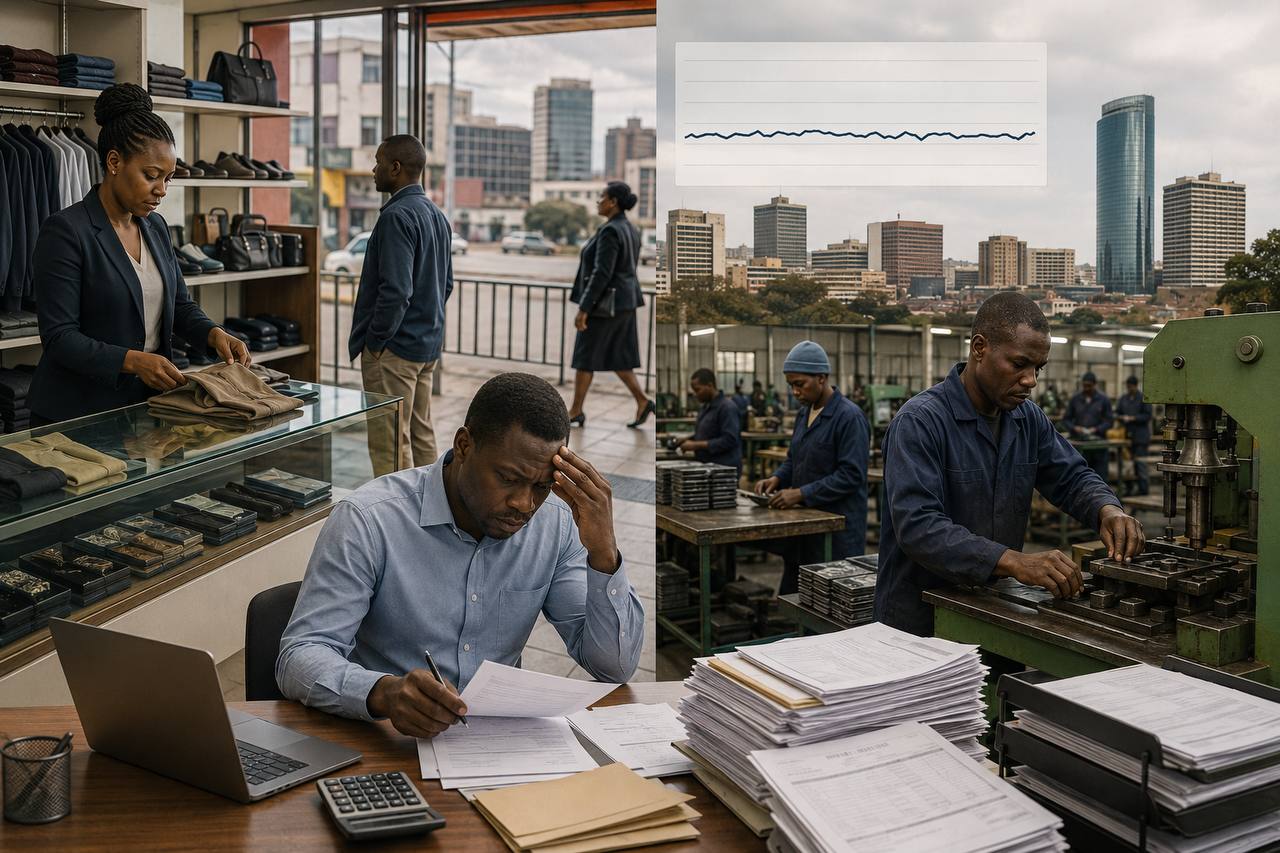
ART's warning about prolonged market pressure says something important about Zimbabwe's economy in mid-2026. Stability has improved, but that has not automatically restored demand.
The Financial Gazette reported this week that Amalgamated Regional Trading expects Zimbabwe's difficult operating environment to persist through the second half of 2026 despite better currency stability and easing inflation. The company cited liquidity constraints, rising operating costs, import competition and regional volatility as ongoing headwinds.
On its own, that would be just one company's caution. But broader reporting suggests ART is describing a wider pattern rather than an isolated problem.
NewsDay reported on 29 June that ART stayed profitable in the first half despite headwinds. That matters because it shows the issue is not necessarily collapse. It is strain. Equity Axis also reported that ART's sales volumes recovered 5% in the half year to 31 March 2026, but that working capital shortages, high finance costs and supply disruptions were still limiting output. Some demand is there, but converting it into easy growth is still difficult.
That fits what other business reporting has been saying about Zimbabwe in recent weeks. The Zimbabwe Independent reported on 29 June that tight monetary policy has helped support exchange-rate stability and lower inflation, but that liquidity shortages, high interest rates and cautious consumers are still weighing on activity. The Financial Gazette also reported in June, citing IH Securities, that weak formal job creation and persistent poverty were continuing to limit household purchasing power even as macro conditions improved.
That distinction matters. Lower inflation and a steadier exchange rate are real gains, especially after the volatility of recent years. But they do not automatically mean households have more money to spend, that firms can borrow cheaply, or that formal retailers and manufacturers can grow easily.
For businesses like ART, the practical problem is not just headline inflation. It is whether customers have enough purchasing power, whether distributors can finance stock, whether banks are willing to lend, and whether formal companies can defend margins against imports and informal competition.
This is also why some of Zimbabwe's recent stability stories can sound better in macro language than they feel on the ground. If inflation slows partly because liquidity is tight and spending is weak, then price stability can arrive before broad recovery does. That is good for currency management, but it can still leave companies operating in a low-demand environment.
ART's caution is therefore useful as a signal. It suggests Zimbabwe's second-half challenge is no longer just whether the authorities can stabilise prices. It is whether that stability can translate into freer cash flow, stronger consumer demand and easier business conditions.
Until that happens, more listed companies are likely to keep sounding the same note: the macro picture may be calmer, but the market is still under pressure.
For the latest exchange rates, visit the ZimRate homepage, use our currency converter, or track historical exchange rate trends. You can also read our explainer on what the USD to ZiG rate means day to day.
This article is for informational purposes only and does not constitute financial advice.