
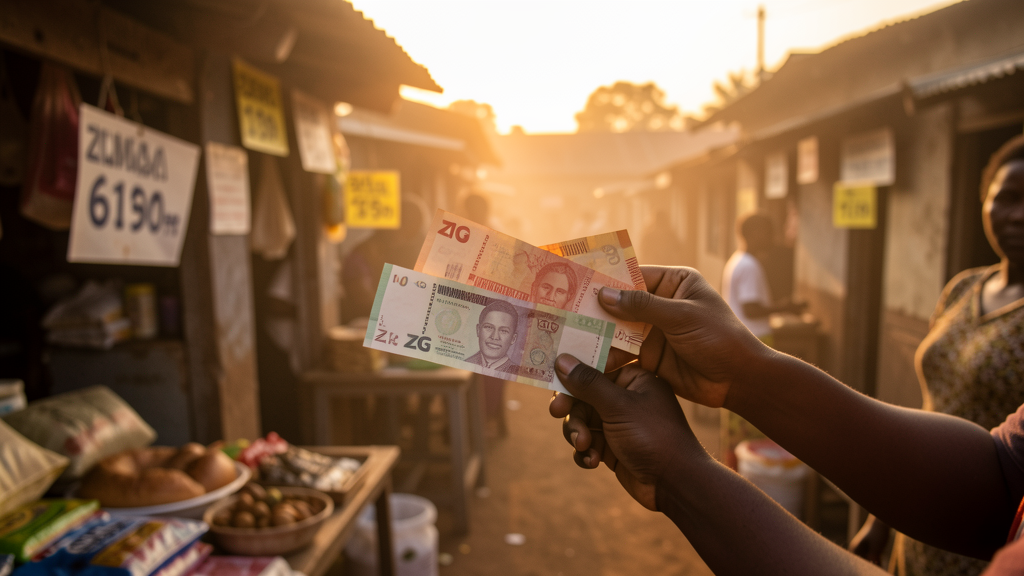
Zimbabwe's price pressures eased sharply in May 2026, with monthly inflation dropping across both the local currency and the US dollar. That is according to data released by the Zimbabwe National Statistics Agency (ZimStat) on Tuesday.
ZiG inflation falls to 0.5% month-on-month
The Zimbabwe Gold (ZiG) consumer price index rose just 0.5% in May compared to the previous month, down 0.6 percentage points from April (New Zimbabwe; NewsDay). Year-on-year, the ZiG inflation rate stood at 4.4%, easing from 4.8% the month before (The Star).
For anyone earning in ZiG, that monthly figure matters more than the annual one. It tells you how much more you paid at the till this month compared to last, and at 0.5%, the pace is noticeably slower than the 1.1% consumers faced in April.
USD prices also cooling
Dollar-denominated inflation told a similar story. Month-on-month, the USD rate slowed to 0.3%, a steep drop from 1.1% in April (NewsDay). Food and non-alcoholic beverages inflation held at 0.8%, while non-food inflation fell sharply to just 0.1%, down from 1.2% the previous month (NewsDay).
Year-on-year, however, USD inflation edged up to 2.8% from 2.2% in April (New Zimbabwe). The annual rise reflects higher base effects from early 2026 rather than a sudden spike in current prices.
What is driving the slowdown?
Analysts point to easing global energy tensions as a key factor. Negotiations between the United States and Iran, plus ceasefire agreements aimed at reopening the Strait of Hormuz, have reduced speculation around oil supply disruptions (New Zimbabwe). For Zimbabwe, where transport and energy costs feed directly into food prices and manufacturing, calmer oil markets translate into steadier prices at home.
The broader trend also looks encouraging. The average monthly inflation rate between January and May 2026 stands at 0.3%, well below the 1% average recorded throughout 2025 (NewsDay). That suggests a sustained shift toward lower price volatility, not a one-month blip.
What it means for your wallet
So what does this mean for someone shopping at OK or picking up groceries at Mbare Musika? Prices are still rising, but more slowly. At 0.5% a month in ZiG terms, a basket of goods that cost 100 ZiG last month now costs about 100.50 ZiG. Compare that to April, when the same basket would have risen to 101.10 ZiG.
Zimbabwe's dual-currency economy means both ZiG and USD price movements affect daily life. The weighted inflation rate, which combines both currencies, came in at 0.4% for the month (New Zimbabwe). That composite figure gives the clearest picture of overall purchasing power.
For a broader view of how the ZiG has performed over time, see the ZimRate historical exchange rate tool. To check the latest ZiG rate against other currencies, visit the ZimRate currency converter.
Whether this cooling trend holds through the second half of the year depends largely on global energy prices and the Reserve Bank of Zimbabwe's monetary policy stance. For now, the numbers point in the right direction.
This article is for informational purposes only and does not constitute financial advice.


