
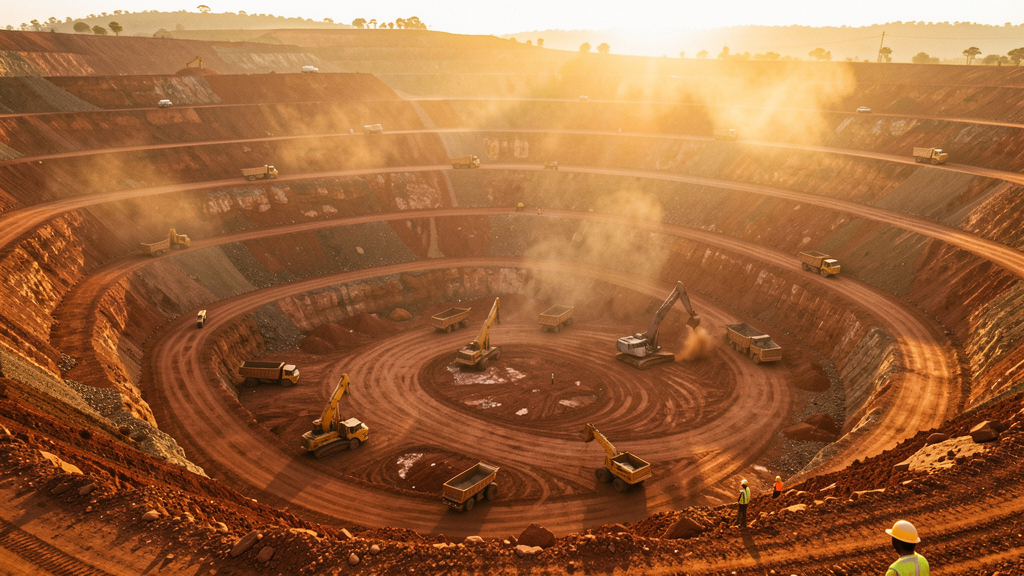
Gold remains Zimbabwe's steadiest economic anchor. The country has wrestled with currency instability for decades, yet the yellow metal keeps delivering. 2026 is shaping up as another strong year for the sector.
12.6 Tonnes in Four Months
Zimbabwe delivered 12,636.51 kilograms of gold to FGR between January and April 2026. That figure is 1.3% ahead of the same period in 2025, when the country ultimately posted a record 46.73 tonnes for the full year. The momentum is real.
Large-scale miners led the charge in April. Their deliveries jumped 28.27% year-on-year to 1,213.93 kilograms, signalling genuine expansion in processing capacity.
Total April deliveries reached 3,324.59 kilograms, up 16.5% from March. Artisanal and small-scale miners drove the recovery, delivering 2,110.66 kilograms, a 20.7% month-on-month rebound. They account for roughly 75% of national output.
The Price Tailwind
Global gold prices have provided a powerful backdrop. The 2026 average sits around US$4,870 per ounce, with a peak of US$5,400 in late January. FGR's current buying price for high-grade ore is near US$4,230 per ounce.
These levels triggered Zimbabwe's top royalty tier of 10% on sales above US$5,000, introduced in the 2026 budget. For the Treasury, that means significantly more revenue from large-scale producers.
For context, 2025's gold exports brought in US$4.61 billion. That was nearly half of Zimbabwe's total export earnings of US$9.7 billion. It is the kind of foreign currency inflow that keeps the ZiG currency system functioning.
Can Zimbabwe Hit 50 Tonnes?
FGR General Manager Peter Magaramombe told Parliament the company is optimistic about the 50-tonne target. The raw numbers tell a more cautious story. The first four months imply a run rate of roughly 37.9 tonnes for the full year.
Closing that gap requires averaging about 4,670 kilograms per month from May through December. That is a 25% increase over April's pace. Ambitious, yes, but the drier months historically deliver the highest output as conditions improve for alluvial mining.
New capacity is also coming online. Mazowe and Redwing mines are reopening under Namib Minerals, and formalisation programmes are expanding at Elvington and Amaveni.
A Policy Misstep and Recovery
The road has not been without bumps. March deliveries fell to 2,854 kilograms after the RBZ introduced a 90:10 ZiG retention requirement on gold payments. The policy unsettled artisanal miners who rely on payment certainty.
Once the RBZ suspended the requirement, April's rebound confirmed the disruption was policy-driven, not structural. Anyone following Zimbabwe's mining sector knows this pattern: a policy experiment, pushback from producers, then a correction.
What It Means for the ZiG
Gold exports are the single largest source of foreign currency supporting the ZiG. With prices above US$4,000 per ounce and production tracking ahead of last year, the currency's backing is on firmer ground than it was twelve months ago.
Whether that translates into lasting stability for ordinary Zimbabweans earning and spending in ZiG depends on how the rest of 2026 plays out. For now, the numbers are moving in the right direction.
This article is for informational purposes only and does not constitute financial advice.


